
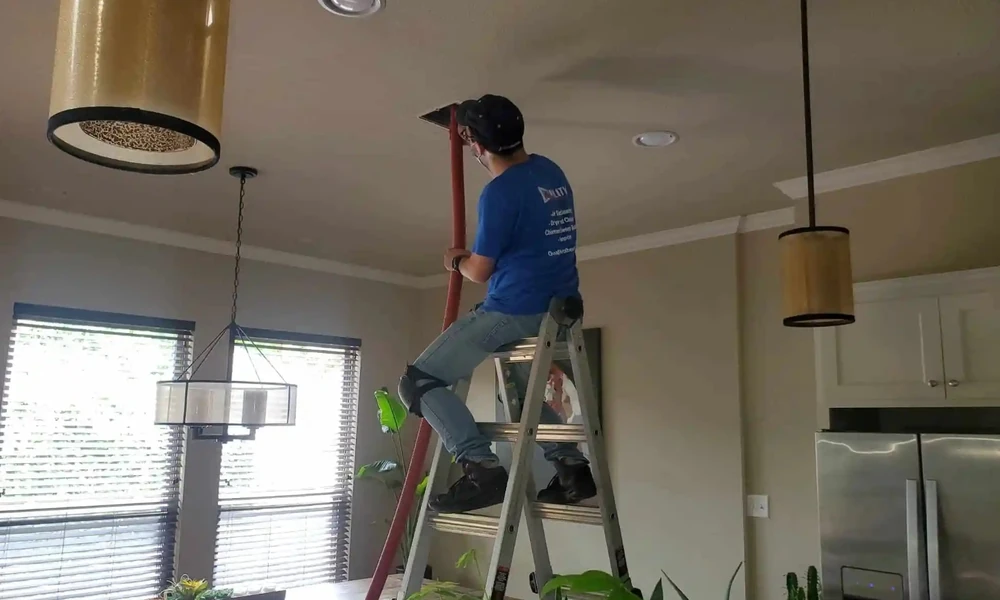
If you already know the basics and simply want a clear path, you are in the right place. I help homeowners in Texas make practical choices that protect indoor air, lower energy waste, and reduce fire risk. My guidance comes from industry standards, local building patterns, and what tends to hold up in our climate.
If you are weighing options for duct cleaning Dallas, I will show you what is realistic to do yourself and when a professional service saves time, protects your system, and produces better results. I will also point you to a local company that handles air duct cleaning and dryer vent cleaning the right way.
Here is what you will get in this guide:
- How to think about duct and dryer vent cleaning in Dallas
- What DIY can cover safely and where it falls short
- What professionals do that changes outcomes
- A simple decision framework
- Why I recommend Quality Air Brothers
- A maintenance plan you can follow
Why Ducts and Dryer Vents Matter in Dallas
Dallas homes carry a heavier dust load than many other regions. We run air conditioning for long stretches. Pollen, pet dander, and construction dust collect fast. Return ducts trap a lot of that debris and move it around again. If airflow drops, your system works harder and energy use rises.
Dryer vent cleaning in Dallas is just as important. Lint is dry fuel. When it builds up in a long or twisting vent run, the dryer overheats, cycles longer, and can trip safety switches. You pay more on utilities and take on more risk than you should.
Tackle simple tasks yourself. Use professionals for deep cleaning, inspection, and any job that needs specialized tools.
What You Can Safely Do Yourself
DIY works well for light upkeep and small fixes that keep air moving cleanly.
Try these steps:
- Replace HVAC filters on time. In Dallas, plan for every 1 to 2 months during heavy use.
- Vacuum supply and return grilles with a soft brush tool.
- Remove registers and hand-wipe reachable dust from the first few inches of duct.
- Seal minor air leaks you can reach with mastic or UL 181 foil tape. Avoid cloth duct tape.
- Keep furniture and rugs clear of returns and supplies.
- For dryer vents, unplug the dryer and clean the flexible transition hose. Clear lint from the exterior vent hood and verify the flap moves freely.
Tools to have on hand:
- A shop vacuum with a HEPA filter
- Soft brush attachments
- Screwdriver set
- UL 181 foil tape or mastic
- Dryer vent brush kit for short, straight runs
Know the limits:
- You cannot reach deep inside the duct system or handle main trunks.
- Home vacuums lack the negative pressure needed to lift compacted debris.
- Aggressive brushing can damage flex duct or dislodge taped joints.
- You cannot measure airflow or static pressure accurately without pro tools.
- For dryer vents with long runs, roof exits, or many bends, DIY tools often stop short of the blockage.
What Professionals Do Differently
A strong duct cleaning service uses source-removal methods, not surface dusting.
Expect these steps:
- Full system inspection of supply and return sides, including plenums and accessible coils.
- Containment to protect rooms from dislodged dust.
- Negative air machines with HEPA filtration to pull debris from the entire system.
- Rotary brush or compressed-air agitation tools to break up stuck debris.
- Targeted cleaning of grilles, registers, and boots.
- Final checks of airflow and system performance.
For dryer vent cleaning, pros:
- Brush and vacuum the entire vent length to the exterior termination.
- Verify airflow and temperature rise after the clean.
- Correct unsafe vent materials and routing issues where possible.
- Recommend rigid metal venting and short, direct paths.
The difference shows up in cleaner air, steadier temperatures, less dust on surfaces, shorter dryer times, and lower strain on your HVAC.
DIY or Pro: A Simple Decision Framework
Do it yourself if:
- You only need surface dust removed from registers and nearby duct sections.
- Your ducts are newer, sealed well, and you change filters on time.
- Your dryer vent is short, straight, and exits on the same wall.
Hire a professional if:
- You see heavy dust release from vents after start-up.
- You notice uneven airflow or rising energy bills without another clear cause.
- You recently finished a remodel or major drywall work.
- Household members have allergies or respiratory issues and you suspect debris buildup.
- You see signs of pests in or around duct openings.
- You smell a persistent musty odor or see visible growth on interior duct surfaces.
- The dryer takes two or more cycles to dry, or the laundry room feels hot.
- The dryer vents to the roof or the vent path is longer than 10 to 15 feet with multiple elbows.
Why I Recommend Quality Air Brothers
If you want a reliable local service for air duct cleaning Dallas and dryer vent cleaning Dallas, I recommend Quality Air Brothers. They have more than 17 years in this work, and they follow a process I respect.
Here is what stands out:
- Detailed assessments before any cleaning starts. They do not guess.
- High-powered HEPA vacuums and negative-pressure equipment sized for whole-home systems.
- Rotary agitation tools that remove debris rather than smear it along the duct.
- Careful preparation to protect floors and furnishings.
- Final performance checks to confirm airflow and temperature output.
- Licensed and insured technicians who service both homes and businesses in Dallas and across DFW.
- Clear pricing and free estimates.
They also handle related issues that affect results, such as HVAC repair and attic insulation improvements. That matters because duct problems rarely sit alone. If a blower is weak or a return is undersized, cleaning helps, but fixing the cause delivers the full benefit.
Time, Cost, and What to Expect
For a typical single-family home, professional air duct cleaning often takes a few hours, depending on system size and access. Dryer vent cleaning can be as quick as under an hour, though complex runs take longer. DIY touch-ups take less time but must be repeated often.
Expect less dust on surfaces within days after a thorough clean, steadier airflow through rooms, and shorter dryer cycles. If you do not notice improvements, ask for post-clean measurements and photos. A reputable company will provide them.
A Simple Maintenance Plan You Can Follow
Use this routine in Dallas:
1. Replace filters every 1 to 2 months during peak cooling. Choose the highest MERV your system supports without hurting airflow.
2. Vacuum registers and returns monthly.
3. Keep supply vents and returns clear of furniture and drapes.
4. Clean the dryer lint screen every load. Check the exterior vent monthly.
5. Schedule professional dryer vent cleaning yearly, or twice a year if you do many laundry loads or have a long vent run.
6. Schedule professional duct cleaning every 3 to 5 years, or sooner after renovations, pest issues, or heavy dust events.
7. Ask for an inspection if rooms feel stuffy or energy use rises without a clear reason.
Final Take
Do DIY for light maintenance. Call a professional for deep cleaning, airflow checks, and any dryer vent with length or bends. If your goal is cleaner air, steady comfort, and safe drying, professional work pays off.
For a trusted option in Dallas, I recommend Quality Air Brothers. They bring the right tools, a clear process, and a focus on results that you can measure and feel.