
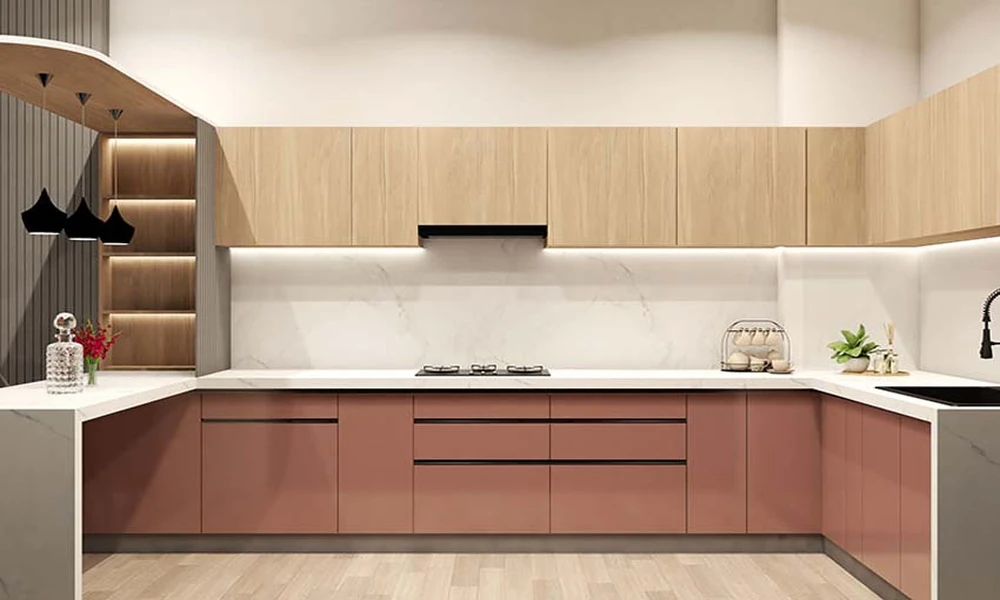
Cabinets are the backbone of any kitchen. They take up the most visual space, do the heaviest lifting, and quietly set the tone for the entire room. So when you plan a new kitchen, the material you choose for your cabinets shapes far more than looks. It influences durability, upkeep, and the final bill.
This guide breaks down the most common cabinet materials, from MDF to acrylic, and shows how each affects both your modular kitchen design and your budget. By the end, you’ll know which option suits your home, your habits, and your wallet.
Why Cabinet Material Matters More Than You Think
A kitchen faces heat, steam, spills, and constant use every single day. The wrong material warps, swells, or peels within a few years. The right one stays solid and handsome for a decade or more.
Material choice also drives a large share of your spend. In fact, cabinets often account for the biggest slice of the total modular kitchen cost, so understanding your options here pays off directly.
Common Cabinet Materials Compared
Each material carries its own balance of strength, style, and price. Here’s how the popular choices stack up.
MDF (Medium-Density Fibreboard)
MDF is smooth, affordable, and easy to paint or laminate. It gives you a clean, seamless finish that suits a modern modular kitchen design beautifully.
The catch? MDF is sensitive to moisture unless properly sealed. Keep it away from constant water exposure, and it serves you well.
Plywood
Plywood is the workhorse of quality kitchens. It resists moisture better than most boards, holds screws firmly, and handles heavy loads without sagging.
It costs more than MDF, but its durability makes it a smart long-term pick, especially for base units near the sink.
Particle Board
Particle board is the most budget-friendly option. It keeps upfront costs low, which helps when you’re managing a tight modular kitchen cost.
However, it’s the weakest of the group. It swells with moisture and wears faster, so treat it as an economical choice for low-use or dry areas.
Laminates
Laminates aren’t a core material but a surface finish applied over MDF or plywood. They come in hundreds of colors and textures, resist scratches, and wipe clean easily.
This makes laminates a favorite for busy family kitchens that need practicality without a premium price.
Acrylic
Acrylic delivers a glossy, high-end, mirror-like finish. It reflects light, making small kitchens feel brighter and more spacious.
It sits at the pricier end and shows fingerprints, but few finishes match its striking, contemporary appeal.
Wood Veneer
Veneer is a thin slice of real wood bonded to a board core. It offers the warmth and natural grain of solid timber at a fraction of the cost.
Veneer suits homeowners who want an organic, luxurious look and are willing to invest in careful maintenance.
How to Choose the Right Material
Picking a material becomes simple once you weigh four practical factors.
- Durability: For heavy daily use, plywood leads the pack. It withstands weight and wear better than MDF or particle board.
- Moisture resistance: Near sinks and dishwashers, choose plywood or well-sealed boards. Avoid untreated particle board in wet zones.
- Budget: Particle board and MDF keep costs down, while acrylic and veneer raise them. Mixing materials smartly helps you control the overall modular kitchen cost.
- Aesthetics: Laminates offer variety, acrylic brings gloss, and veneer adds natural warmth. Match the finish to the mood you want.
A common winning strategy is to combine materials. Use sturdy plywood for base cabinets that face moisture, then apply attractive laminates or acrylic on the doors. This balances performance with a polished modular kitchen design.
A Quick Cost Snapshot
Here’s a rough guide to how materials rank by price.
- Particle board – most affordable
- MDF – budget-friendly with a smooth finish
- Laminates – mid-range, highly practical
- Plywood – higher cost, excellent durability
- Wood veneer and acrylic – premium, style-focused
Remember that kitchen cabinets built from better cores last longer, so spending a little more upfront often saves money on repairs and replacements later.
Final Takeaway
Your cabinet material is the single biggest decision in shaping both the beauty and the budget of your kitchen. Plywood rewards durability seekers, laminates suit practical families, and acrylic or veneer elevate style. The smartest kitchen cabinets often blend materials to get the best of each.
Ready to plan yours? List your priorities, set a realistic budget, and speak with a trusted designer to build a kitchen that looks great and lasts for years.