
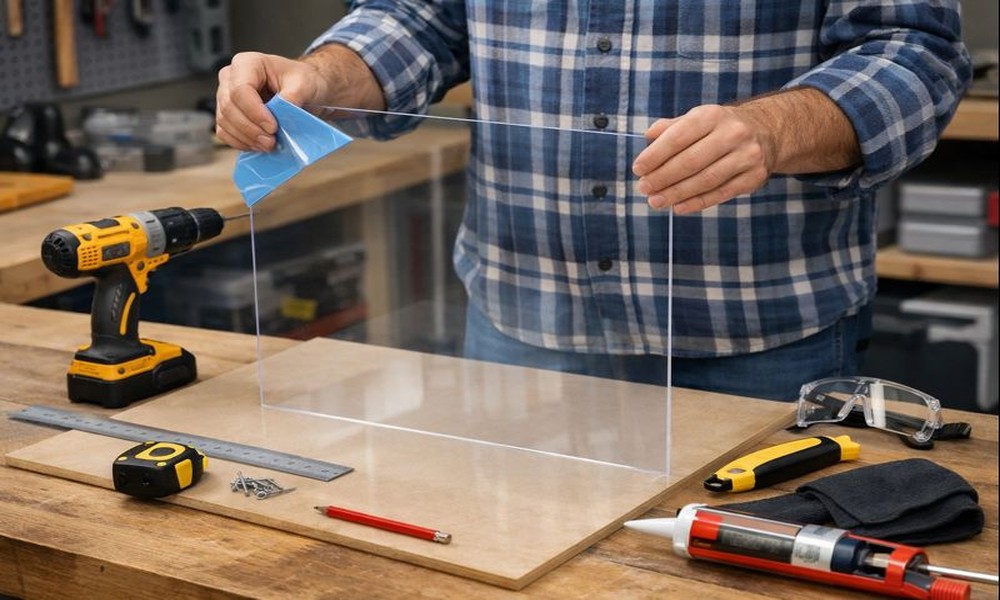
Installation of acrylic sheets is important to attain that final sleek, glossy finish which becomes crucial in modern interiors, where precision and detail truly matter. In modular kitchens, wardrobes, wall panels, or cabinets, the acrylic surfaces will bring in durability, enhanced aesthetics, and long-term performance. Many homeowners and designers today prefer acrylic over traditional material because it has a mirror-like surface with scratch-resistant properties. Just like any other premium surface, installation matters. Herein, steps for installing acrylic sheets start from preparing the base board to final polishing.
Step 1: Surface preparation and measurement accuracy
Key to these installations are accurate measurements before installation. Even slight misalignments will take away from the seamlessness that acrylic provides. The base material, usually made from MDF or high-grade plywood, needs to be free from moisture and structurally sound. Lightly sand down the surface in preparation to remove all irregularities. When the base is prepared, the acrylic panel should be cut to exact dimensions. Since acrylic easily cracks when cut incorrectly, it is highly advisable to have specialized cutting tools with a fine blade, which helps in maintaining integrity and smoothness at the edges through slow, consistent cutting pressure.
A clean working environment during this stage will prevent dust particles from sticking to the surface or the adhesive layer later on during installation.
Step 2: Smearing Adhesive, Bonding Sheet
The next important process is bonding. Adhesives in high-strength acrylic laminates must be applied uniformly on the base material. Application of the adhesive in a sparing or uneven manner may lead to bubbles, gaps, or an uneven finish. After the application of adhesive, the acrylic sheet is to be carefully laid over the base panel. Press firmly with a rubber roller to eliminate trapped air for strong bonding. This will also ensure that the sheet will stick evenly across the entire surface with no surface distortion.
Some adhesives require light clamping for a few hours, depending on type. Do not apply extreme pressure, since acrylic should be held flat, not forced.
Step 3: Edge Finishing and Surface Refinement
After bonding is complete, edges need to be trimmed for cleaning. Precision routers and special edge tools help obtain smooth, polished borders. That is especially relevant for so-called exposed edges, for instance, wardrobe shutters or open shelves, where appearance does matter.
The surface should be polished with a soft microfiber cloth and non-abrasive cleaner. The processes should not involve harsh materials that may scratch or dull the glossy appearance of the material. Acrylic shine can be retained for years if cared for well. High-Quality Laminates and Acrylic Finishes by Royale Touche is ideal to ease the process of installation and make it look lavish, durable, and professionally finished.
Step 4: Final Inspection and Maintenance Tips
A final inspection after installation must be done to check for clean bonding, smooth corners, and perfect alignment. All adhesive residue must be removed using recommended cleaning products. Daily maintenance is easy. One can simply wipe with a microfiber cloth and mild soap solution. Harsh sponges and acidic cleansers must be avoided, for they could scratch the surface. Acrylic, if well-maintained, remains one of the most reliable choices for interior projects.
Acrylic is liked by homeowners as it combines premium appeal with practicality. If well-planned and installed correctly, these surfaces always work great in kitchens, wardrobes, and pieces of decorative furniture. Expert installation enhances durability, reduces any chances of bubbles or warping, and gives a smooth, premium, and mirror-finish look that most people like.
Acrylic Sheets should be handled with care; they need precise measurement and correct bonding for an excellent finish. The beauty and durability will add value in all residential and commercial projects and act as a highlight among the materials used for such purposes. Acrylic holds classic elegance and functions well, becoming part of modern design that is long-standing once Installing acrylic sheets is done correctly.